Clearaudio
Ironically, we imagine that the only people to "use" this turntable will be those who use it to make their overpriced entertainment den look more hip. But hey, it's a 6" thin turntable priced to blow at $4,164 USD and no mention of whether it is belt-driven or not, but hey, why get mired down in details.Designer of the week
Eero Saarinen.Although Saarinen made his reputation in the United States following World War II, he had his roots in Europe. Until 1923, he lived in Finland with his father Eliel Saarinen an architect of the National Romantic movement, who went on to teach architecture at the University of Michigan. For Eero architecture was a discipline like the fine arts, and in particular, sculpture. He called himself a "form giver" and everything he designed had a strong sculptural quality.
Saarinen began his career as a student at Yale University and after travels and studies in Europe returned to the U.S. and taught for a brief period at Cranbrook. Cranbrook was founded by publisher George C. Booth and Eliel Saarinen in 1927 and Saarinen became Director in 1932. Two of its graduates were Charles Eames and Florence Schust Knoll. Saarinen and Eames collaborated on various projects, culminating in a range of furniture that won first prize at an exhibition held at the Museum of Modern Art in New York in 1940 entitled, "Organic Design in Home Furnishings." After 1946, however Eames went to work for Herman Miller; Saarinen became associated with Knoll Associates. A number of Saarinen’s chairs for Knoll were to become landmarks in the history of 20th century design. The first, preceding the "Womb" chair, was the "Grasshopper" chair. It was made from a single piece of fiberglass, upholstered in latex foam and poised on a tubular steel frame.
Between 1948 and 1956, Saarinen created a range of office chairs for Knoll and another classic chair, the "Tulip," was produced as part of a range of pedestal items for Knoll between 1955 and 1957. Saarinen’s stated objective with the pedestal group was to clean up the "slum of legs" in domestic interiors. Like his furniture, Sarrinen’s architecture is characterized by expressive sculptural forms. His two masterworks are the TWA Terminal at Kennedy Airport, New York and Dulles International Airport, Washington, D.C.EcoSphere
Hold a world in the palm of your hand. Developed by NASA, the EcoSphere is a complete, closed bio-regenerative ecological system, sealed in hand blown glass. Contains earth, water, air, and life (algae, shrimp, and microbes that provide each other with nutrients). All it needs to sustain itself is indirect sunlight. Choose the 4 sphere or 5.25 pod (each sold separately).Eames LCA made by Rashid (Kareames)

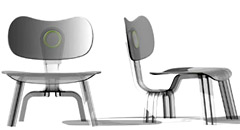
Karim Rashid did this for Magis in 2002. Not as slender and beautiful as the original Eames LCW but a nice exercise in acrylic applications.
A little info:
karim rashid was born in cairo, egypt in 1960; half english, half egyptian and raised in england and canada. he received a bachelor of industrial design in 1982 from carleton university in ottawa, canada. he pursued graduate design studies in naples, italy, with ettore sottsass and others, then moved to milan for one year at the rodolfo bonetto studio. in 1993 he opened his design practice in new york city, where he continues to live and work where he designs products for companies such as nambé, issey miyake, pure design, fasem, guzzini, tommy hilfiger, sony, zanotta, citibank, and others. his work has been exhibited at and placed in the permanent collections of the philadelphia museum of art (1999); MOMA new york (1994-98); SFMOMA (1998-99); chicago athenaeum, chicago (1994-99); wexner center, columbus, ohio; museum of decorative arts, montreal; toronto design exchange, toronto; the israeli museum, new york; the british design museum, london; tokyo gas, tokyo; the groningen museum, holland; and others. karim's work has also been published internationally. awards include the daimler chrysler 1999 award, USA; george nelson award 1999; the silver IDEA award for the ‘oh chair’ 1999; the philadelphia museum of art collab award 1999; the brooklyn museum of art designer of the year 1998 with 11 products into permanent collection. he was a full-time associate professor in industrial design at the university of the arts in philadelphia for 6 years and taught at pratt institute, RISD and the ontario college of art, and lectured at several schools internationally.
Does it ring a bell? (campana bros)

Multidao chair, designer: Fernando and Humberto Campana
Estudio Campana, Brazil
materials:
Compilation of traditional hand-made dolls on stainless steel structure
notes:
This unique chair was created especially for Moss by Fernando and Humberto Campana in their studio in São Paulo, Brazil. Available only by Special Order, each Multidao chair is handmade and will vary from the one pictured here.
dimensions:
40" x 40"
25" height
price:
$18,000.00
The red cat
Anne-Claire Petit catSeveral years ago in China, Anne-Claire Petit discovered a large agricultural area where the women were knowledgeable about weaving and handiwork techniques. They normally would produce traditional hats and bags made from cornhusk. To earn a living outside of the harvest season these Asian women farmers began to work crocheting for designer Anne-Claire Petit.
dimensions:
18" tall
price:
$45.00
Lucellino table lamp!
Lucellino table lamp, designer: Ingo Maurer, design year: 1992, manufacturer: Ingo Maurer, Germany, materials: glass, brass, plastic, and hand finished wings made of goose feathersnotes: equipped with electronic Maurer-designed "Touch-Tronic" transformer-sensor-dimmer, in white; lamp is turned on and dimmed by pinching bulb with fingers. 50 watt non-halogen bulb is specially designed and provided with lamp.
dimensions: bulb mounted on flexible wire, so height can vary (suggested overall height 13"). price: $650.00
Motorized house?

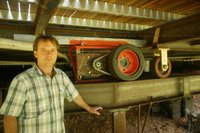
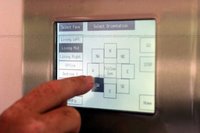
Talk about energy efficient!Built largely of glass and steel, the house is powered by an electric motor and has some interesting abilities not normally on offer with a conventional home – if you’re keen to soak up some rays, you can program the room you’re in to follow the sun. The maximum speed of the house is one revolution every thirty minutes, a speed offering a kaleidoscope-like usage of ambient light. “Living in the house has been where we’ve learned the most – until you experience that nature’s cavalcade of lights between sunset, morning, evening and then dusk, you can’t fully visualise what’s possible. This is a unique solution for people who want to appreciate where they live and I suspect there are many rewards in the design of rotating homes that we’re yet to discover. And even when we’re at our tenth or one hundredth home, we’ll still be learning things. Some aspects of the view have naturally become favourites says Everingham. “We always turn the living room towards the river at night, and I’ve found I’m more interested in working with a particular view than chasing the sun, so I’ll move the house to where I want it and then let it sit.
Given the interest the project has generated within Australia, Luke will be building more rotating homes. “I have looked at what’s required to build rotating homes and I have realised that the best way for me to move forward is to find a national and perhaps international partners to work with,” says Everingham.“If you started from scratch, it’d cost a million dollars Australian to build one and you’d be hard pressed to know as much as we knew about the process at that point, let alone what we can add having lived in the house and seen the possibilities of what is possible in the future.”
via gizmodo/gizmag
A classic, revisited

From the creators of the funky stroller!
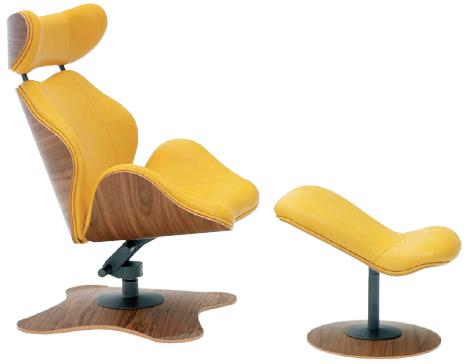
Stokke Tok recliner chair provides very comfortable sitting, unique functionality and distinctive contemporary design. This best defines the Stokke recliner chair: "We are all created to move – not to sit still. Stokke chairs initiate movement and variation and inspire you to change your posture while seated." Designed by Japanese designer Toshiyuki Kita in collaboration with Scandinavian Stokke's Ole Petter Wullum, Tok is a recliner that is in a class of its own. With its comfort and modern design, Tok recliner can be an elegant centrepiece for any room. It's made of three laminated wood shells covered with soft textile or leather upholstery over the Polyurethane foam. The mechanical parts are steel and aluminum. Wood can be varnished, stained or oiled. The chair can rotate 360° and has three distinct sitting positions. What's most interesting is that it's "designed to vary your sitting posture", and its design prompts you to do just that. To always support your body properly and independently of your sitting position, this Stokke recliner has a fixed angle between the seat and the backrest. Everything else is adjustable: the headrest, and the resistance to your body weight, and the height. The footrest is also designed to accommodate for any position. Place two Tok recliner chairs side-by-side to fill the room with style and comfort. Stokke
Eclipse lamps

Changing colors are reflected around a silvered glass sphere. The light effect also engages the viewer by coming in and out of view as you move around the lamp. Focusing hidden LEDs into the focal point of the globe creates this unique effect.
Available in two models: lunar (cool colors) and solar (warm colors)
Design Lounge Light Table

Thanks to the lockable roles the 23plus1 lounge light table has a free-floating look, a white lacquered corpus, an energy-saving fluorescent lamp inside the body and a foot-operated switch for comfortable on/off-switching. The table plate is an extremely thick plexiglas plate with an extraordinarily high resolutioned design picture on a special foil pulled up mirror-inverted from the bottom. This interplay ensures the unique, incomparable appearance of the 23plus1 light-table. And thanks to the usage of that special foil the light spreads fascinating smoothly across the entire design surface.
Switched on or off, the 23plus1 Light Table is a breathtaking beauty. “I would love to have one" will be your thought when you see it in real.
Designer of the week
Frank Gehry is one of the most sought-after, internationally recognized and prolific architects and designers in the world today. His work defies categorization, but has become an icon of current architecture with such projects as the Vitra Museum in Weil am Rhein, the Guggenheim Museum in Bilbao, Spain, the Frederick R. Weisman Art Museum in Minneapolis and the Walt Disney Concert Hall in Los Angeles. Gehry’s newest architectural projects include the proposed and controversial New Jersey Nets complex in Brooklyn, New York, a satellite museum for the Guggenheim, a hospital wing in Scotland and a museum extension in Gehry’s birthplace of Toronto. In addition to designing over 30 existing buildings, Gehry has distinguished himself with a handful of furniture designs, created throughout his career.After studying architecture at the University of Southern California and spending a year at the Harvard Graduate School of Design, Gehry established his own architecture office in 1962, in Los Angeles. Ten years into his career, Gehry launched the value-based Easy Edge chair series constructed from laminated cardboard. However, he soon withdrew the Easy Edge chairs from production, fearing that his popularity as a furniture designer would detract from his reputation as an architect.
In the 1980’s, Gehry returned to furniture design and created his Experimental Edges furniture, again out of corrugated and laminated cardboard. The Experimental Edges series was "art furniture," in many ways similar to the work of Ron Arad and Tom Dixon, who used materials such as corrugated iron, plaster, industrial girders and wicker. The concept was an indication of Gehry’s affinity for exploring structural strength and form in uncommon materials through mastery of engineering.
The early 1990’s brought the development of Gehry’s sculptural and gallery-ready Cross Check series for Knoll International. This collection of bentwood tables and chairs was a radically inventive use of materials: the chairs were made of "woven" strips of maple—taking inspiration from wooden apple crates—and required no additional structural support. Gehry also designed a series of Fish Lamps using "color core" formica, which are now in private and museum collections.
In early 2004, Gehry completed his year-long collaboration with Emeco to create the Superlight™ Chair, a dynamic new aluminum design that debuted at Milan’s 2004 Salone Internazionale del Mobile. Weighing in at just 6.5 pounds, the Superlight blends strength with fluidity and comfort by gently moving with the sitter. Inspired by Gio Ponti’s Superleggera Chair, the Superlight illustrates Gehry’s architectural fascination with aluminum as both structure and skin and his proficiency in meshing components of engineering and design to create innovative, user-friendly furniture.
Gehry has received numerous prestigious prizes and awards, including the Pritzker Prize in 1989.
Snug
The Snug chair is handmade in thick fibreglass to create a sculptural form. It provides low comfort seating as slats that flow out from the sides flex to follow body contours of each user.The flexible slats gave the design a tactile, fun and interesting feel when used. It can be used for applications in the home but can also be utilized in social spaces or corporate interiors. The use of pearlescent white, lilac and blue paints on the exterior gave the Snug a unique finish from everyday chairs.RYE STRAW SCREEN
Another Limited Edition piece from farm21, this spectacular Tri-Part Screen is made from panels of laminated rye straw in resin and acrylic. 'Functional art' at its best, this is practical as a space divider or sculpture in its own right.Overall - 1600mm x 25mm x 1700mm high
Each panel - 532mm x 25mm x 1700mm high
Tri-part Rye Screen - £2,500
Marsh Table

This sculptural table was conceived as a mass with areas removed, in a play between solid and void. The table's visual weight seems to hold the lightness of its empty spaces. The geometry of this contemporary piece lends it an organic feeling reminiscent of natural geological forms. The Marsh is surprisingly practical, with a generous surface, and the voids that provide space to display books (or hide remotes). Made with the utmost attention to detail, the Marsh table exemplifies the pinnacle of metalworking craftsmanship. The volume is crafted from 14-gauge steel, seamlessly welded and finished smooth. The piece is then finished with DESU bone white, architectural grade polyester powder coat. Each piece is handmade exclusively in our Brooklyn, NY studios and is signed and stamped with the DESU insignia. Made to order in 8 to 12 weeks.
What not to do with a Picasso
There is a reason why so much artwork - particularly older, valuable pieces - is displayed behind glass cases or out of the public's reach: the art is easily damaged and galleries and museums don't want to take unnecessary chances with their investments. When you are a private collector, those safeguards aren't always maintained. This isn't a problem when personal collections are small, but it is when you own a $140 million dollar painting, such as Picasso's La Reve, owned by Steve Wynn. Wynn, after selling the painting for just under that price, accidentally punched a hole in the canvas with a careless elbow.Apparently, the painting can be restored and Wynn is taking this as a sign that the painting should not be sold, but when you're dealing with something so valuable in the first place, even private collectors might consider an extra precaution or two.
via luxist.com
From Russia with organization

Vector
The holder for small items was designed as a business performance curve. The vector of the graph either rises (then it’s green and goes up) or falls (then it’s red and goes down).
The office employee turns Vector depending on how much success he or she has been having of late.
Vector is an ideal present for a medium level manager and an excellent self-motivation tool.
Stainless Steel Exposed Rail Systems
System Twin was specially developed to guide ceiling-high door leaves. It can be universally employed for door leaves and materials of all kinds. The system is suitable for door leaves having a thickness of 8 - 50 mm (5/16" - 1 15/16") and a maximum weight of 135 kg (298 lbs). Running rail fixtures are possible for wall, glass and ceiling fasteningPhoto can
The DIY CanFrame: Transform a Tin Can into a Simple Photo Frame in 15 Minutes!Beautiful! Simple! Cylindrical! All the qualities you look for in the finest photo frames, now available in the CanFrame — a simple DIY photo frame project from Photojojo. Our tutorial will step you through an insanely simple way to show off your photos for the price of a 79 cent can of beans. All you need is the aforementioned can, some glue, a photo, and 15 minutes!
The Ingredient list
A great photo — Panoramas work best, but regular photos that can be cropped wider than they are tall also work well.
Metal can — Soup, beans, oatmeal, anything with a label should work. We’ve used tin cans and plastic/glass jars. Acid-free rubber cement — We used rubber cement, but stronger stuff will give better results with heavy photo paper. Scissors or cutting blade, Tape measure (or a ruler and a calculator), Rubber bands
Step 1: Measure your can
Use a tape measure to measure the height and circumference of your can. These will be the approximate dimensions of the image you need to print. (Of course, you’re a smarty and you’ve already figured out that a ruler and a calculator can take the place of a tape measure–just measure the height, then measure the diameter of the top of your can. The can’s circumference is Pi x Diameter of the top.)
Step 2: Print your photo
Use your favorite image editing program to resize your photo to the dimensions you measured earlier. Your image height should match the height of your can, and the length should match the can’s circumference.
To give yourself some wiggle room later, make your image a smidge taller and about a half inch to an inch wider than you measured. Giving yourself extra width is particularly important, as you’ll want some overlap to help the glue set properly.
Finally, the thinner the paper your photo is printed on, the more willing it’ll be to conform to the curvature of your can. We used plain paper with great results, though glossy photo paper worked, too.
Step 3: Cut your photo to size
Once printed, use scissors or a cutting blade and ruler to trim your photo to match the height and circumference of your can.
Remember to leave yourself at least a half inch of extra width for overlap and a little extra height. (You can always trim away the excess later if you need to.)
Step 4: Glue your photo to your can
To affix your photo to your can, you can use any kind of strong glue that will bond paper.
Here’s how to form a strong bond if you’re using rubber-cement: Apply your cement to your can and let it dry. As it dries, apply a good coat to the back of your photo. Make sure to glue the overlapping part of the photo so it’ll stick to itself, and press the wet photo to the dry can.
Step 5: Tie it tightly and wait
To help the photo bond to the can label, wrap the can tightly with several rubber bands. Make sure you’ve worked out all the air bubbles, and leave the rubber bands and can overnight to ensure a good, solid seal.
Ta da! You’re done!
Designer of the week
Hans J. Wegner.Finished his carpenter apprenticeship in 1931. While still an apprentice, he made furniture on his own. Wegner studied furniture design at the Danish School of Arts and Crafts. By then, he had joined the inner circles of furniture makers - The Copenhagen Carpenter Corporation - who organized furniture design competitions and exhibitions for young architects. From 1938 to 1942, Wegner was employed at Erik Moeller's and Arne Jacobsen's design studio. His main task was to work on furniture and interior design assignments for the new town hall in Aarhus, Denmark. In 1946 he started teaching at the furniture department of The Danish School of Arts and Crafts. 1949 marked the breakthrough for Wegner's career as a furniture maker when he displayed at the Carpenter Corporation exhibition. Hans J. Wegner is a meticulous and admired craftsman. But beyond his talents as a wood worker, he also has a unique sensibility for the material he works with - wood. His furniture always starts at the drafting table, he then continues his studies with small scale models in cardboard, plywood and wood, and finalizes the design with full scale prototypes that are evaluated for comfort and detailing. His favorite materials are solid oak, beech, teak, ash and maple, but in the mid 60s, he also started working with laminated wood. Durability and functionality are important requirements to Wegner, and so is timelessness. The natural warmth and a well-balanced character stand out in his furniture, as he understands the nature of the wood and the possibilities and limitations of this, the most natural of all materials.

Every chair crafted by the best wood workers in the world.
The China Chair from 1944 was inspired by Chinese seating furniture from the 17th century. Like many of his other dining room chairs, the China Chair has characteristic back and arms bent in one piece. In the following years, Wegner designed many new chairs, in total over 200 designs. Some of his most spectacular and famous pieces are: The Peacock Chair (1947), The Folding Chair (1949), The Wishbone Chair (1959), The (Round) Chair (1950), The Flag Halyard Chair (1950) and The Valet Chair(1953).
Dolmen Mini Radio
Dolmen Mini RadioRené Adda, 2004
Small in size and big on sound, this award-winning radio's front LED display changes color when tuned to AM (red) or FM (green). Includes an electronic volume control, front speaker, and retractable antenna. Made of rubber-finish ABS plastic and aluminum. Two AA batteries included.
Aalto vase in green
Aalto Vase, LargeAlvar Aalto, 1936
The word aalto is Finnish for "wave." In the 1930s Aalto captured the eternal wave in his classic series of vases. Long included in the MoMA design collection, these now-famous undulating vases are masterpieces of free-form modern design. With a sensual and flowing form, they seem to mimic the water they hold. Each lead-free crystal piece is mouth-blown into a mold and hand-polished. Made by Iittala.
Carlos Enriquez - International plastic artist.
As you may remember, I made a short note not so too long ago, about Carlos Enriquez' sculptures based on the japanese caracter "Astro Boy", well I was lucky to get an invite to the opening night of his exhibit this past saturday on the Wynwood Art Distric in Miami.Carlos Enriquez's proposal is based on the recreation of a series of colosal monstrous personalities. The japanese Kaiju Eiga, meaning "mysterious creature" inspires their hybrid appearance. These mutants descend from a post nuclear parallel universe whose strange appearance combines anthropomorphic elements (eyes, armr, legs), zoomorphic )scales, claws) and vegetation (flowers). The complex anatomy of these fiberglass beings lustrous surface and florescent colors constitute an imaginary answer to the destructive menace of the biological weapons and their consequent influence in the collective psyche.

the address is:
Praxis International Art, Wynwood Art Distric in Miami.
2219 NW 2nd Avenue, Miami, Fl 33127
305.573.2900
Design Miami 2006
Design Miami/ 2006A new forum for collecting, exhibiting, discussing and creating design.
Based on the tremendous success in its debut year, Design Miami/ is poised to become the most prominent and meaningful forum for international design, bringing together the most influential designers, collectors, dealers, curators and critics from around the world to further the current design culture.
Design Miami/ presents the best international design galleries exhibiting extraordinary historic and contemporary design. This unique show will be held in the Miami Design District from 8 – 10 December 2006. The Vernissage is by invitation only from 8pm until Midnight on 7 December.
In order to further dialogue about design, Design Miami/ also features Design Talks, Design Satellite Exhibitions, art/design installations, and other various collaborations with designers, critics, curators, cultural institutions, gallerists and collectors throughout the Miami Design District.Design Miami/ is pleased to present the 2006 Designer of the Year Award to Marc Newson.
Pepper-Gun
Peppergun ®Our first product and a best-seller for over fifteen years. Patented squeezing action allows one or two handed use. Large storage capacity, easy loading, with our medium size milling mechanism and adjustable grind size
6.25" high in black or red for pepper.
Salt grinder in white with nylon grinding mechanism.
Need spices?